Design and Business
Overview
Exploration of how design can serve as a strategic tool to drive innovation, differentiate brands, and create value for organizations. It emphasizes the integration of design thinking into business processes, aiming to enhance problem-solving, improve customer experiences, and align business goals with creative solutions.
My Contributions
End to End responsibilities that include researching, establishing milestones, creating prototypes, technical & software skills, creation of graphical content, creation of presentations, creation of prototypes, creation of websites, video editing, mapping values of a company, mapping key stakeholders, mapping timelines of the project, communication and delivery.
2023 - Present
1. TexSavvy + Green Weave AI : Developed as a group project at Lancaster University
Developing a Design Driven Company that addresses a societal challenge. The company demonstrates a technology based approach to revolutionise the landscape of textile waste management through innovative design services and AI-powered solutions. The company aims to educate and empower businesses in India by embracing sustainable practices that minimise textile waste and maximise resource efficiency. The diverse suite of services strive to guide businesses towards achieving green business certifications while promoting sustainable practices. Green Weave AI will help navigate the complex world of sustainable textile recycling with strategy based consulting services providing tailored solutions that not only enable green certifications but also provide socio-economic incentives.
Process
1. Demonstration of advanced understanding of potential future directions for design.
2. Critically and creatively engage with complex societal challenges and their relationship to innovation.
3. Understand and articulate the role of design beyond traditional disciplinary boundaries.
4. Conduct applied and theoretical research into people, products, places and their interactions.
5. Business Model and Revenue Mapping.
6. Applied Research to create market positioning.
7. Developing Brand Value, Brand Identity and prototyping the service based product.
Skills Used
For development of internal Content:
Research
Adobe Illustrator
Adobe Photoshop
Website Designing
Figma Prototyping
Adobe InDesign
Adobe After Effects
For development of Web Platform:
Figma
Wix.com
Photoshop
AI Chatbot Creator


2. Integration of AI within Lancaster City Museums : Developed as a group project at Lancaster University - Client: Lancaster City Council
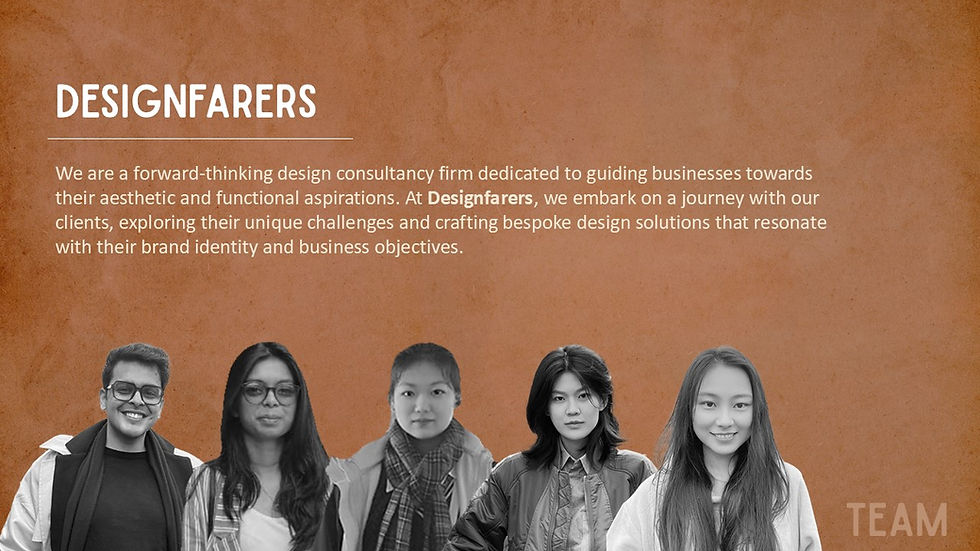
Establishing a Design Company to with a key vision of innovation. The established company "Designfarers" were then paired with the client "Lancaster City Council". The brief of the project was to create a proposal to integrate technology within the traditional Museum settings of Lancaster City. The project involved communication with the client throughout the project life-cycle and a final presentation delivered directly to the client. This undertaking involved research into the current landscape of the City Museums, their norms, scope, limitations; whilst mapping the large-scale positioning of Technology (AI) within Museums in today's Web 3.0 World. Market research was conducted through site visits, observation and online surveys. The project delivery includes a manifesto of these topics along with a proposed prototype for early adoption of AI suited to the market, budget, infrastructure and demographic of Lancaster City Museums.
Process
1. Qualitaive research about the current market scenario of the proposed technology and establishing a need for it.
2. Identify gaps, and explore AI's potential to enhance visitor engagement.
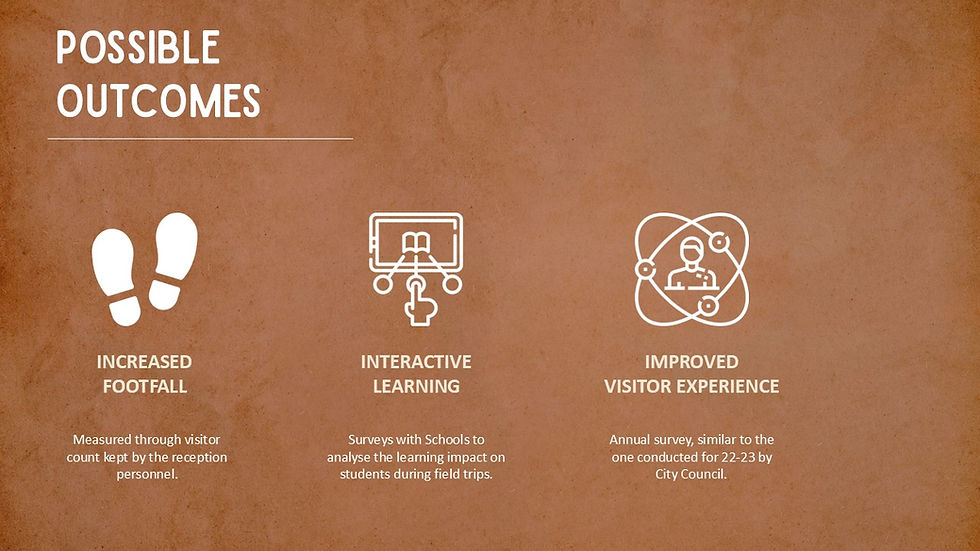
3. Analyze visitor demographics and engagement patterns to evaluate the impact of AI solutions.
4. Conduct surveys and interviews with visitors and staff to identify user preferences and challenges.
5. Develop a detailed AI implementation plan, including goals, feasibility, costs, workflows, and a sustainability-focused roadmap.
6. Design user journeys and interaction points like chatbots and immersive experiences to improve engagement.
7. Refine proposed solutions based on feedback from stakeholders and test groups.
8. Create prototypes, such as AI chatbots and kiosks, to showcase practical applications and readiness for evaluation.
9. Delivering a Proof of Concept that is ready to be pitched for potential execution.
Skills Used
For development of internal Content:
Market research
Google Forms
MS Office Suite
Adobe Photoshop
Adobe Illustrator
For development of Prototype:
Figma
Adobe Photoshop
Adobe Illustrator
Adobe After Effects
Filmora
Prototyping
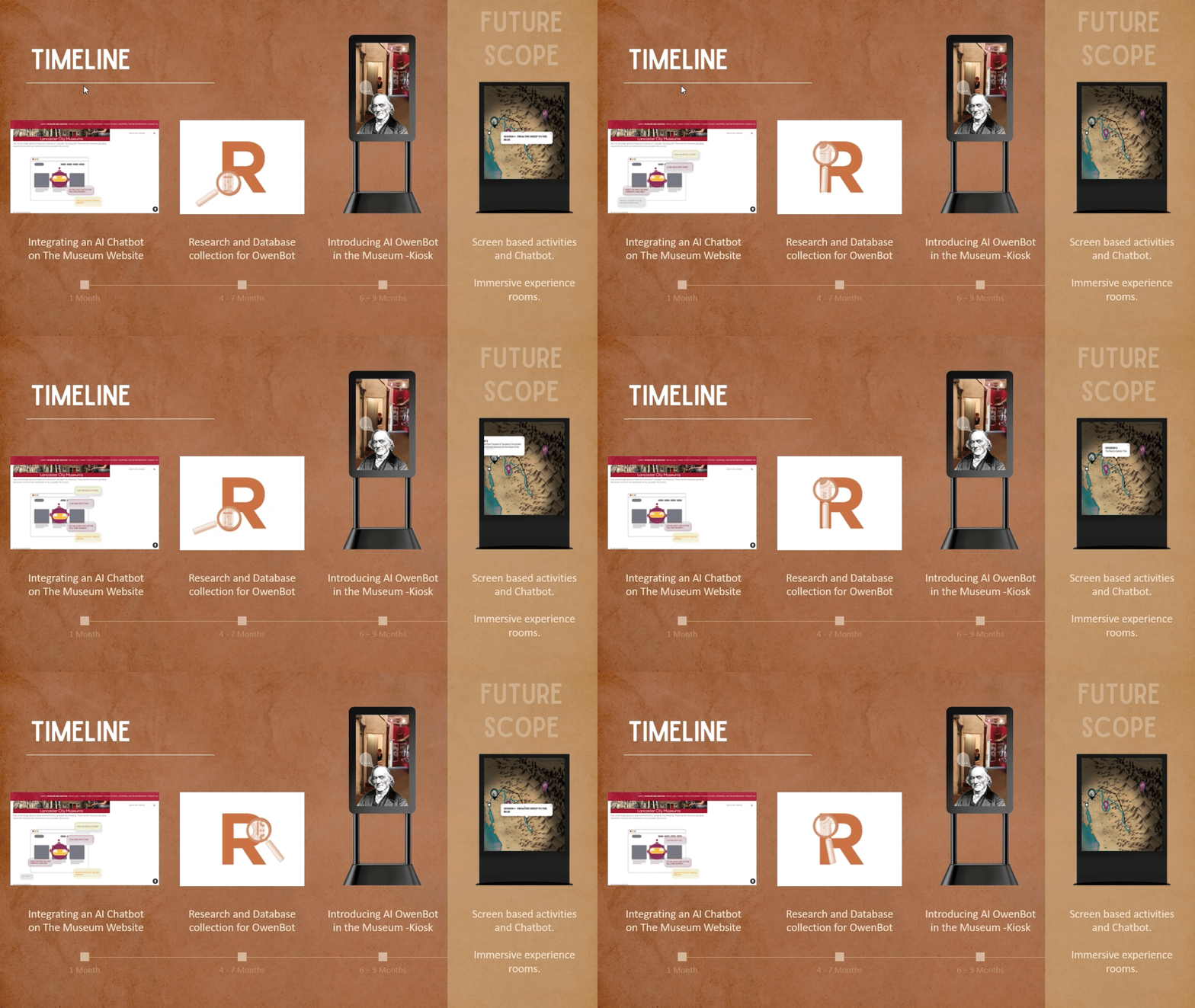
Product Timeline

Presentation